


Winter &
Vitamin D Deficiency
Patients’ vitamin D levels drop significantly during winter.
By Dr David Deam
Published September 2019
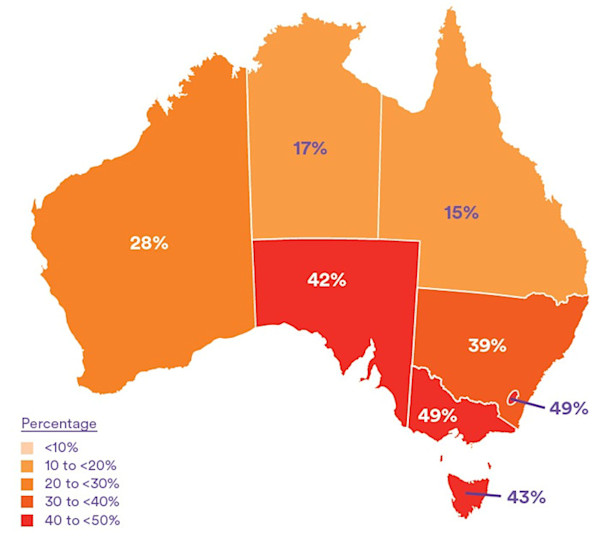
Vitamin D levels fluctuate significantly depending on the season, especially in the Southern states of Australia. At the end of winter, approximately 36% of Australians are vitamin D deficient, in comparison to 14% at the end of summer. Therefore, making the end of winter the best time to test patients for vitamin D deficiency.
The below diagrams indicate the percentage of Australians with a vitamin D deficiency in summer (diagram 1) versus winter (diagram 2).
Diagram 1 - Vitamin D deficiency in summer by state (2011-2012)
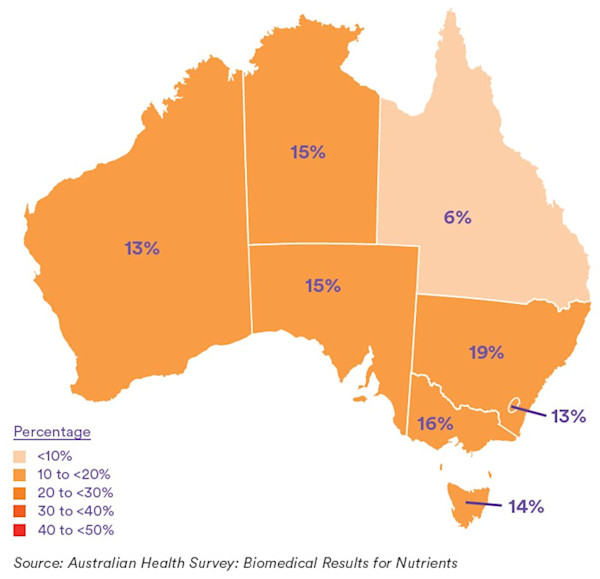
Diagram 2 - Vitamin D deficiency in winter by state (2011-2012)
Health implications of vitamin D deficiency
Vitamin D deficiency is of concern as it can lead to a variety of health conditions including the loss of bone density, which can contribute to osteoporosis and fractures in adults and rickets in infants and children. Low levels of vitamin D have also been found in association with other health conditions, such as cardiovascular disease, diabetes, immune system diseases, microbial and respiratory diseases, cognitive impairment in older adults, mental health and cancer.
Target vitamin D levels
The international recommendations for adequate vitamin D levels vary, but based on a review of current literature and recently published recommendations 1, 2 Clinical Labs suggests that adequate vitamin D status is a serum level equal to, or greater than, 50 nmol/L at the end of winter. This level should be 10-20 nmol/L higher at the end of summer to allow for seasonal decrease.
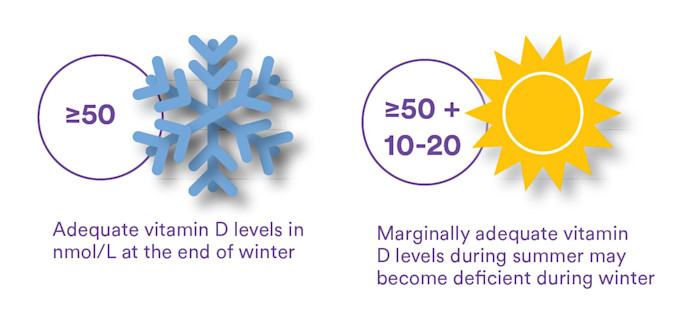
This figure is based on the level below which parathyroid hormone concentrations begin to rise and the risk of fractures increases.
As for all tests, Australian Clinical Labs’ pathologists and scientists will continue to evaluate current literature and our target range may change as new evidence emerges.
Who to test
Vitamin D testing should be ordered for patients at risk of vitamin D deficiency, including:
- Housebound people - including the sick and disabled
- Elderly in high care
- People with darker skin
- People who cover their skin due to religious or cultural reasons
- People who regularly avoid the sun
- People who work indoors
Also patients with:
- Signs, symptoms and/or planned treatment of osteoporosis or osteomalacia
- Increased alkaline phosphatase with otherwise normal LFTs
- Hyperparathyroidism, hypo- or hypercalcaemia or hypophosphataemia
- Malabsorption (i.e. CF, IBD, coeliac, etc)
- Medications known to decrease vitamin D levels (i.e. anticonvulsants)
- CRF and transplant recipients
Vitamin D testing
Vitamin D testing at Clinical Labs measures the concentration of total 25-hydroxyvitamin D (25-OHD) in a patient’s serum. The report will also include previous test results, for comparison (if applicable), and suggested cut points to define sufficient, deficient and severely deficient vitamin D levels.
Treatment
To ensure adequate levels of vitamin D are maintained throughout the year, the following sun exposure times (mins per day) are recommended for 1/3MED for moderate fair skin, at either 10am or 2pm daily.3

| December-January | July-August | |
|---|---|---|
| Perth | 5-6 mins | 20-28 mins |
| Adelaide | 5-7 mins | 25-38 mins |
| Melbourne | 6-8 mins | 32-52 mins |
| Hobart | 7-9 mins | 40-47 mins |
| Sydney | 6-8 mins | 26-28 mins |
| Brisbane | 6-7 mins | 5-19 mins |
| Cairns | 6-7 mins | 9-12 mins |
If patients are unable, for a variety of reasons, to gain the required amount of sun exposure for vitamin D production, supplementation may be required.
A maintenance dose of up to 1000 IU/day may be adequate, however some individuals will require higher doses. Severe vitamin D deficiency (serum level <20 nmol/L) may require 3000-5000 IU/day for 6-12 weeks.
Supplements should be vitamin D3. Adequate dietary calcium is also required, at least 1g/day and up to 1.3g/day, for older adults. Many patients will require supplementation to achieve this amount.
Note: Calcium supplements are best taken before sleep to ensure maximum absorption and suppression of peak bone turnover which usually occurs between approximately 2am and 3am.
If you enjoyed this article, subscribe to our electronic Pathology Focus newsletter.

How to Order Vitamin D Testing
Note the reason for testing to meet Medicare eligibility criteria for bulk-billing in the ‘Clinical Notes’ section on a Clinical Labs General Pathology Request Form.
Blood samples can be collected at any Clinical Labs collection centre.
Due to the long half-life, repeat testing should not be performed earlier than 3 months after either starting or changing the dose of vitamin D supplements.
Serum calcium, phosphate and parathyroid hormone will assist in placing the vitamin D level within the context of overall calcium homeostasis.
If osteoporosis is present, assessment of bone turnover markers (fasting C-terminal telopeptide of type 1 collagen [CTX] and procollagen type 1 N propeptide [P1NP]) may be considered to provide a way of monitoring bone turnover in response to therapy.
About the Author

Dr David Deam
MBBS MAACB FRCPA- endocrine function testing
- protein abnormalities
- laboratory automation
Dr Deam graduated with Honours in Medicine from Monash University in 1978 and obtained his FRCPA in 1985 following postgraduate training in Biochemistry at the Royal Melbourne Hospital. After several posts in Chemical Pathology at the Royal Melbourne Hospital and the Royal Women’s Hospital, he was appointed Head of Chemical Pathology at the Royal Melbourne in 1996. He joined Gribbles Pathology (now Australian Clinical Labs) in 1998.
Dr Deam has played an active role in teaching scientific, nursing and medical staff at both undergraduate and postgraduate levels and has been an examiner for the Australasian Association of Clinical Biochemists as well as the Royal College of Pathologists of Australasia.
Dr Deam’s research interests and publications include work on thyroid function testing, various aspects of diagnostic protein measurement and the rational use of biochemical tests. His special interests include testing of endocrine function; protein abnormalities; as well as laboratory automation and application of computing to pathology services.
Local Pathologists
 Pathologist

 Pathologist
Related Pages

Thyroid Function Test Interpretation
Dr Phoebe Stanford explains how to interpret thyroid function tests accurately, addressing common pitfalls and interferences to improve diagnostic confidence.

Iron Deficiency in Women
Associate Professor Chris Barnes discusses the prevalence of iron deficiency in women, its symptoms, diagnostic strategies and effective treatment options.

Investigating Fatigue in Women
Associate Professor Chris Barnes explores modern approaches to diagnosing fatigue in women, offering clinical recommendations to improve patient outcomes.